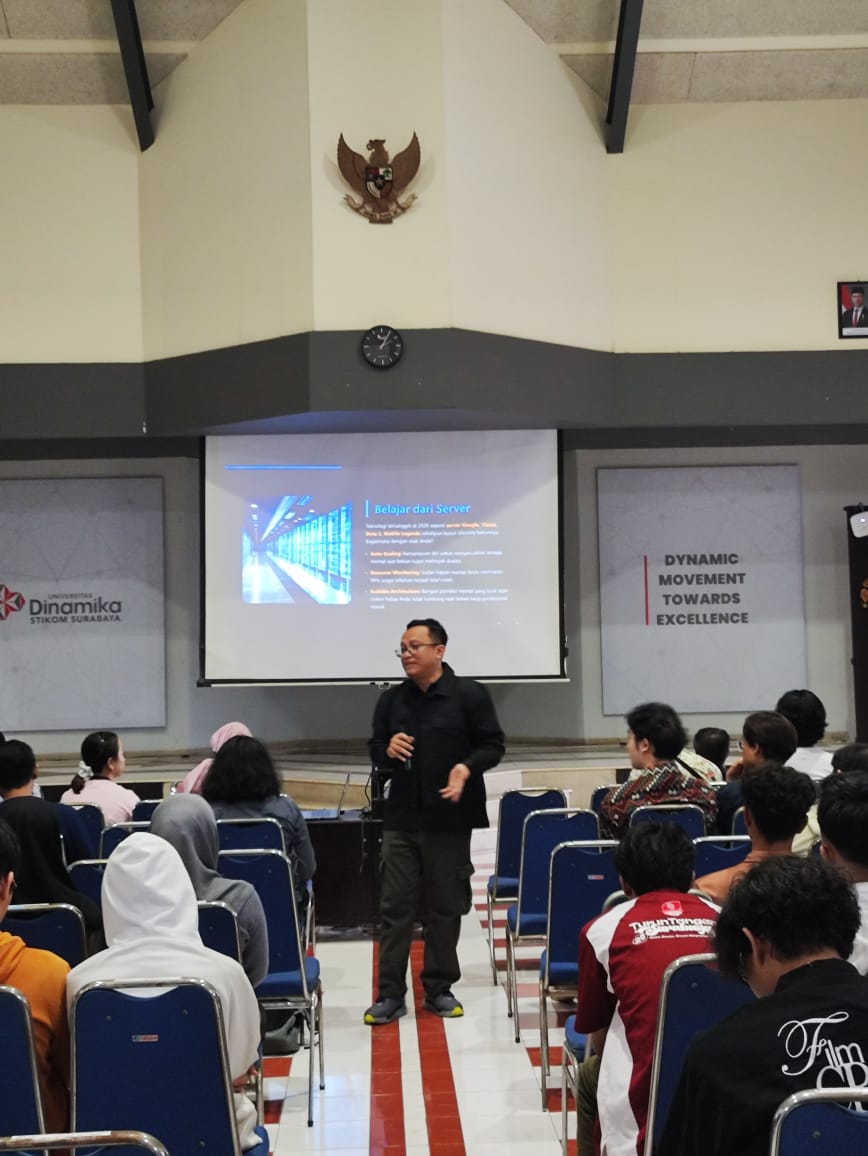
When I stood before the students at Universitas Dinamika (Undika) recently, I did not want to talk about “stress management” in the traditional sense. Instead, I asked them one question that changed the energy in the room: “Are you the Main Character in your story, or just a background NPC following a pre-written script?”
In the high-pressure world we are walking into, building mental resilience in 2026 is not just a nice-to-have skill (it is your primary survival stat). In my session, “Resiliensi Mental 2026,” we explored why the pressure you feel is not a sign that you are failing the game (it is a sign that you have finally reached a high-level area).
The Overwhelmed Player (Recognizing the “Lag”)
In any great game, too many things happening on screen at once causes lag. Your life is no different. Between graduation targets, social pressure, and the noise of the digital world, we often hit a point where our internal processor just cannot keep up.
Understanding mental resilience in 2026 starts with recognizing these three symptoms:
-
The “Frozen” Screen: Have you ever stared at a task for an hour without doing a single thing? That is not laziness (it is your system protecting itself from a total crash because there are too many open windows in your mind).
-
The Input Delay: This is the growing gap between knowing what you need to do and actually having the energy to press the “Start” button.
-
The Background Noise: Every worry about the future is a background process eating up your focus. Eventually, you run out of energy before you even get to the fun parts of the quest.
The Reality of the “Final Build”
In games, we can reload a save if we mess up a dialogue choice. In life, every choice is a Final Build. Building mental resilience in 2026 requires accepting that there is no “Load Game” button. Time only moves forward, and what you do today becomes part of your character’s permanent history.
This is not meant to be scary (it is meant to remind you that you are playing “Hardcore Mode” where every action actually matters). Since we cannot pause the game to fix our mistakes, we have to learn to repair ourselves while we are still moving. You do not wait for a vacation to fix your burnout (you learn to adjust your strategy while you are still on the quest).
Tower Climber vs. NPC
The world of 2026 does not need more NPCs (Non-Player Characters) who just wait for someone else to give them a task. To survive, you must become a Tower Climber.
-
The Climber Path: View every difficulty not as a roadblock, but as a “Side Quest” designed to level up your stats.
-
The Skill Tree: Stop trying to be “good at everything.” Focus your XP on a specific “Skill Tree” that makes you unique.
-
Ownership: A Main Character does not just react to what happens to them (they decide where they are going next).
The Mental Resilience In 2026 Stack (How to Level Up)
To keep your character at peak performance, you need a daily routine that protects your health and your energy.
1. The Mental Reset (Garbage Collection)
Your mind gets cluttered with “junk data” (old regrets or unfinished thoughts). You need a manual Reset. This could be writing down your worries or playing an instrument to clear the noise. Clear your mind so you can focus on the Main Quest.
2. Your Personal Shield (The Firewall)
In 2026, noise is everywhere. Build a Shield. Only allow things that help your quest into your inner circle. If it is just noise that makes you feel bad, learn to “drop” that information immediately.
3. The Quest Cycle (POAC)
Even the best players need a strategy: Planning (Checkpoints), Organizing (Load Balancing), Action (Execution), and Review (The Post-Mortem).
Final Thought about (Start Your Quest for Mental Resilience In 2026)
The world is not going to get easier, but you are going to get stronger. To my juniors at Undika: Do not wait for a “patch” to fix your life. You are the hero. Upgrade your skills. Learn from your logs. Finish your Main Quest.